

A photo book is not a photo album. That distinction matters more than it sounds.
A traditional photo album is a collection of loose prints slipped into plastic pockets or glued onto pages. A photo book is a professionally printed, bound book where photographs are printed directly onto the pages - the way a magazine or coffee table book is made. No pockets. No loose prints. No peeling corners.
The direct answer: A photo book is a custom-printed book made from your photographs, bound with either a softcover, hardcover, or layflat spine. In India, photo books start from roughly ₹399 for a small softcover and go up to ₹3,000+ for a premium layflat hardcover.
Voice search answer: A photo book is a bound book with your photos printed directly onto the pages - like a professionally published book, not a sleeve album. Prices in India start from around ₹399.
Key Takeaways
- Photo books are printed bound books - photos are part of the page, not inserted into it.
- Three main types: softcover (affordable, casual), hardcover (durable, gift-worthy), and layflat (premium, no gutter gap between pages).
- Size choice matters: smaller books (5x5" or A5) suit personal keepsakes; larger formats (A4 or 12x12") suit wedding or travel photography.
- Most photo books in India ship in 5-7 business days. Planning ahead matters.
- Memoriffy is launching photo books - worth noting if pigment-ink quality with waterproof coating matters to you.
Table of Contents
- What a Photo Book Actually Is
- The Three Main Types
- Sizes and Paper
- What Photo Books Are Best For
- How to Order Online in India
- FAQ
What a Photo Book Actually Is
Think of it like a cookbook. A cookbook has photos printed into every page - the same press that printed the text printed the images. A photo album is more like a binder where you slip recipe cards into plastic sleeves. Same purpose, completely different construction.
That construction difference is what gives photo books their quality advantage. Because the photo is part of the page, the paper can be chosen to handle ink properly - heavier, coated stock that holds colour without bleeding. Most photo book services print on 150-200 GSM paper, significantly heavier than what a home printer handles. I've found people consistently underestimate how much the paper choice affects the final result - a well-printed image on cheap paper looks worse than a decent image on quality stock.
The result is a physical object that reads like a book and holds up like one. Spine intact, pages flat, images sharp.
According to Blurb's photo book guide, the category has grown significantly as consumers shift from print-on-demand snapshots toward curated, narrative-driven physical albums. India follows that same pattern - the wedding album market has largely moved from traditional mounted prints to digitally designed photo books.
And in India specifically, photo books carry cultural weight that loose prints don't. A wedding photo book gets displayed at the couple's home, passed around at family gatherings, handed down. It has permanence. A folder of prints, even good ones, gets sorted into a drawer.
The Three Main Types
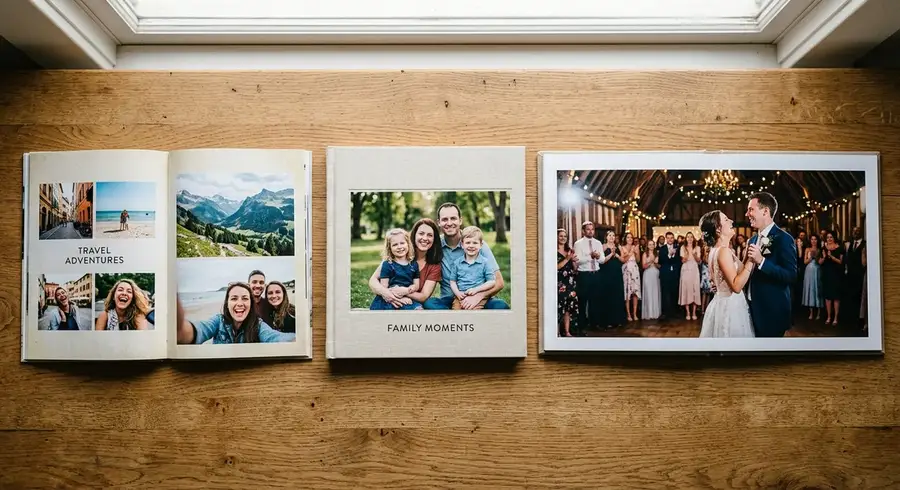
Not all photo books are made the same way. The binding method determines how the book feels, how long it lasts, and what it costs.
Softcover
A softcover photo book uses a flexible laminated cover - the same construction as a paperback novel. Pages are glued together at the spine (perfect binding) and the whole thing folds flat when open.
Softcover books are the most affordable option. In India, a 20-page A5 softcover typically runs ₹399-799 depending on the service and paper quality. They work well for casual use: travel journals, birthday gifts, smaller family albums.
The limitation is durability. A softcover spine will eventually crack with heavy use, and the cover shows wear faster than hardcover. For something you're keeping long-term or giving as a significant gift, softcover is the wrong choice.
Hardcover
A hardcover photo book has a rigid board cover wrapped in printed fabric or laminated paper. It feels more like a proper book - because it is one. The binding is more durable, the spine holds up to repeated opening, and the cover survives being handled without showing wear.
Prices in India for hardcover photo books start around ₹799-1,499 for a standard 20-30 page book. For weddings, milestone birthdays, or anything you plan to keep for decades, hardcover is the baseline.
The one drawback: standard hardcover books use the same sewn or glued binding as softcovers, which means pages don't lie completely flat when open. Near the spine, images get partially lost in the gutter - the gap between the two pages. For most photos this is fine. For two-page panoramic spreads, it's a problem.
Layflat
Layflat is the premium binding method, and it solves the gutter problem completely.
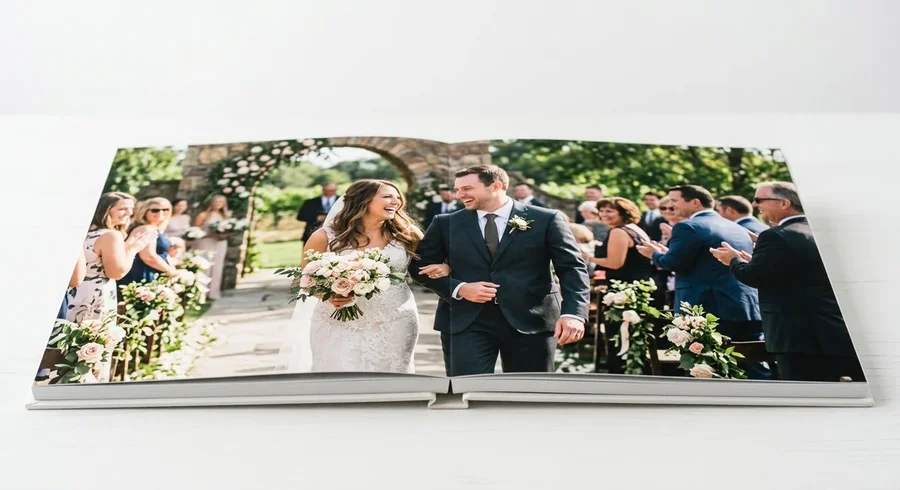
In a layflat book, pages are mounted on thick individual boards and hinged together, so the book opens to a completely flat 180-degree spread. No gutter. No image loss. A panoramic shot can run across both pages with nothing obscuring the centre.
This matters most for wedding photography, landscape photography, and any design where two-page spreads are part of the layout. Professional photographers almost universally prefer layflat for client albums - and honestly, once you've held one open, it's hard to go back to standard binding.
It costs more. Layflat photo books in India typically run ₹1,200-3,000+ depending on size and page count. According to Artifact Uprising's photo book comparison guide, layflat printing adds 40-60% to production cost versus standard binding - that passes through to the price.
Worth it? For 20 photos that matter, yes. For 200 casual holiday snapshots, probably not.
| Type | Starting Price (India) | Durability | Best For |
|---|---|---|---|
| Softcover | ₹399-799 | Moderate | Casual albums, gifts under ₹500 |
| Hardcover | ₹799-1,499 | High | Family albums, milestone keepsakes |
| Layflat | ₹1,200-3,000+ | Highest | Weddings, panoramic photography |
Sizes and Paper
Size choice is less about aesthetics than about the photos themselves.
Small square formats (5x5" or 6x6") suit casual portrait-oriented content - childhood photos, friend group collections, small gifts. The format feels intimate. You hold it like a book rather than display it like an album.
Medium sizes (A5 or 8x8") are the most common. Enough room for proper image quality, compact enough to handle comfortably. A standard wedding preview book or family album typically lives in this range.
Large formats (A4, 10x10", or 12x12") are for when the images deserve it. Landscape photography, travel documentation, professional portfolios. The extra size makes panoramic shots and full-bleed images worth the cost.
On paper finish: most photo books use glossy or lustre finish by default. Glossy works well for vibrant, saturated images. Lustre - a semi-matte finish with fine texture - reduces glare and tends to look more refined in print. It's the default at professional labs for a reason. For a deeper breakdown of how finish affects different image types, the photo printing price guide for India covers this alongside cost comparisons.
Paper weight matters too. Cheaper services print on 150 GSM paper. Better services use 200-250 GSM. Heavier paper feels more substantial, resists curling, and holds ink without the ghosting - show-through from the reverse side - that thinner stock produces.
What Photo Books Are Best For
Photo books are worth the cost and effort for specific use cases. They're not the right format for everything.
Wedding photography is the strongest case. A layflat or hardcover wedding photo book becomes the physical record of the day. It gets handed around at family gatherings, placed on a coffee table, passed to grandchildren eventually. No digital gallery or shared drive does that job.
Travel documentation is another strong fit. A travel photo book from a trip to Himachal, Goa, or Japan tells a story across its pages - a beginning, a middle, an end. That narrative structure is something a gallery wall or a photo strip can't replicate.
Gifts at meaningful moments - retirements, anniversaries, milestone birthdays, farewells - suit photo book format because the size and permanence of the object matches the occasion. A softcover with photos from a work team's history is a more considered gift than a photo frame from a shop.
Where photo books are not the right choice: everyday snapshots you want displayed now, specialty formats like polaroids or photo strips, or situations where you need multiple copies at low cost. For those use cases, standard prints or specialty formats make more sense. The India photo printing service comparison covers the full range of what's available.
How to Order a Photo Book Online in India
The ordering process across Indian photo book services follows a similar pattern.
Choose your format and size first - type, page count, dimensions. Most services let you start here before uploading images.
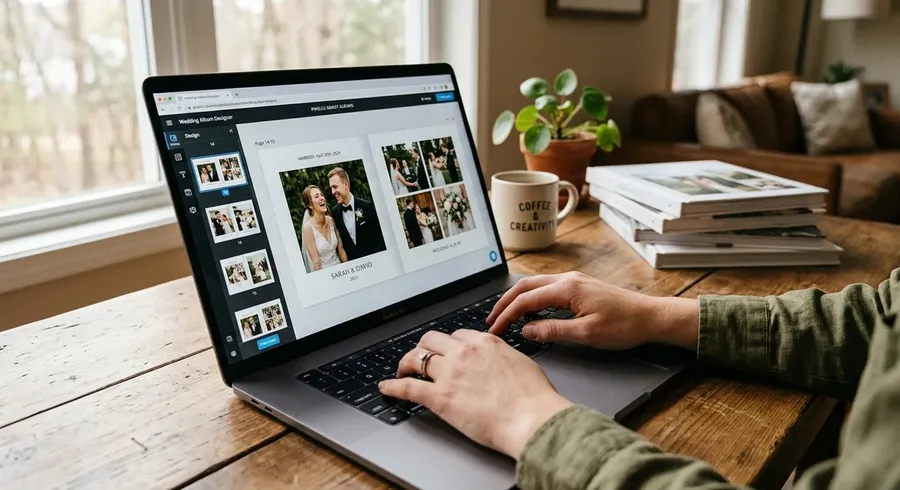
Design the book using the service's online editor. Most have drag-and-drop layouts with preset templates. Upload your photos, assign them to pages, adjust layouts. Some services offer professional design assistance for wedding albums at additional cost.
Review carefully before submitting. Zoom into the preview at 100% to check resolution. Check bleeds - images meant to extend to the page edge need enough overflow so they don't end up with white borders after trimming.
Place the order. Standard delivery across India is 5-7 business days. Some services offer express 3-day delivery in metro cities.
Current photo book services in India include Photojaanic, Zoomin, Picsy, and Canvera, among others. For a comparison of which services use pigment versus dye inks - which determines how long the printed pages hold colour - the guide on waterproof photo prints explains the chemistry behind why it matters for anything you're keeping long-term.
FAQ
What is a photo book?
A photo book is a custom-printed bound book where your photographs are printed directly onto the pages - not inserted into sleeves or pockets. The result looks and feels like a professionally published book. Covers are softcover, hardcover, or layflat depending on the binding type.
What is the difference between a photo book and a photo album?
A photo album holds loose prints in sleeves or adhesive mounts. A photo book has photos printed as part of the page itself - the same way a magazine is made. Photo books have better image quality, more design flexibility, and hold up better over time.
What is a layflat photo book?
Layflat, and it's not close to standard binding for two-page spreads. Pages are mounted on individual hinged boards so the book opens completely flat with no gutter curve. Panoramic images can run across both pages with nothing obscuring the centre. Standard hardcovers can't do this.
How much do photo books cost in India?
Softcover photo books start around ₹399-799. Hardcover runs ₹799-1,499 for a standard 20-30 page book. Layflat starts from ₹1,200 and reaches ₹3,000+ for larger formats. Delivery charges (typically ₹49-99) add to the total. GST at 18% applies at most services - check whether listed prices include it.
Which photo book type is best for weddings?
Layflat hardcover. The flat opening eliminates gutter loss on panoramic spreads, and hardcover construction is durable enough to last decades of handling. It costs more, but for a wedding album that will be used repeatedly and kept permanently, the binding difference matters.
How long do photo books last?
A well-made photo book with pigment-based inks on quality paper can last 50-100+ years under normal storage. Books using dye-based inks show visible colour shift within 5-10 years. For anything meant to be kept, check whether the service uses pigment or dye inks before ordering.
A photo book is where photography stops being a file and starts being an object. For moments that deserve that permanence - weddings, milestones, people you want to remember clearly in 30 years - no digital format replaces what a bound physical book does.
Memoriffy's photo books are coming, built on the same pigment-ink, waterproof-coating approach as our individual prints. Get notified when they launch.