

Key Takeaways
- Canvas prints use a woven fabric surface that creates a matte, painterly texture - ideal for large dramatic wall art but softens fine detail.
- Photo prints on paper deliver sharper colour and finer detail at any size, from small polaroids to large framed prints.
- Canvas suits artistic, impressionistic, or wide-shot images. Photo prints suit portraits, macro shots, and anything with intricate detail.
- Both can last 50-100+ years when printed with pigment-based inks. Cheap canvas with dye inks can fade in as little as 5-10 years.
- In India's humid climate, proper coating and framing matter more than the substrate choice itself.
Table of Contents
The Quick Answer - Canvas If..., Photo If...
The format decision is simpler than most guides make it. Here is the decision table.
| Choose Canvas If... | Choose Photo Prints If... |
|---|---|
| The image is a wide landscape or architectural shot | The image has fine detail - fur, eyelashes, text, intricate patterns |
| You want a large statement piece (24" or bigger) | You want multiple prints in an arrangement |
| The room has a warm, artistic, or contemporary feel | You are giving it as a gift |
| You prefer no glass or frame required | You want glossy, metallic, or lustre finish options |
| The photo has soft tones and a mood-driven composition | The photo is a close-up portrait or macro shot |
| Budget is secondary to visual impact | You need precise colour reproduction |
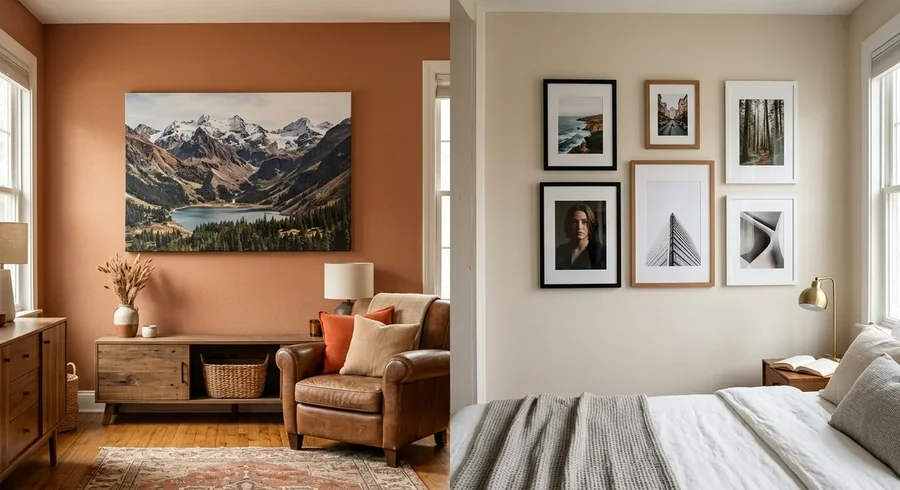
And the honest answer that no comparison guide wants to say: most people end up getting both. Canvas for the big living room wall. Photo prints for the bedroom gallery, the bedside frame, the gift.
What Makes Canvas Prints Different
A canvas print is a photograph printed onto a woven fabric - typically cotton or polyester - and stretched over a wooden frame. The result hangs directly on the wall without needing a separate frame or glass.
Canvas's signature strength is its matte, painterly texture. The weave of the fabric creates a subtle pattern across the image that gives canvas prints a gallery-like quality. Up close, you can see the individual fibres. From a normal viewing distance, the texture reads as warmth and depth rather than sharpness.
This texture is both the selling point and the limitation. Wide landscape photos, abstract compositions, and warm lifestyle shots look exceptional on canvas - the texture adds to the mood. But fine detail - individual hairs in a portrait, feathers on a bird, text in a design - blurs into the weave. Canvas softens everything it touches.
Canvas prints in India typically start from ₹499 for a small 8x10" and scale up to ₹2,000-5,000+ for larger format pieces.
What Makes Photo Prints Different
A photo print is a photograph reproduced on photo paper - a coated substrate engineered to hold ink with exceptional precision. The result is a flat print that can be displayed unframed, in a frame, or as part of a multi-print wall arrangement.
Where canvas brings warmth, photo paper brings accuracy. Individual eyelashes, fabric texture, architectural lines, text at small sizes - all render with fidelity that canvas cannot match. Colour accuracy is also stronger, which matters for portraits, product shots, and skin tones in particular.
Photo prints come in a much wider range of sizes and finishes than canvas. Glossy, matte, lustre, metallic, and satin finishes each change how the image reads - from reflective and vivid to soft and gallery-flat. Small formats like polaroid-style prints down to wallet sizes are only available in photo paper, not canvas.
In India, photo print prices start from ₹45-99 per print depending on service, format, and ink type. For a full breakdown of current pricing across major services, the photo printing price guide for India covers every format with actual numbers.
Head-to-Head: 6 Things That Actually Matter
| Factor | Canvas Prints | Photo Prints |
|---|---|---|
| Detail retention | Moderate - fabric texture softens fine detail | High - paper holds crisp, sharp detail |
| Aesthetic | Artistic, warm, painterly | Photographic, precise, versatile |
| Finish options | Matte only (fabric texture) | Glossy, matte, lustre, metallic, satin |
| Size range | Typically 8x10" to 40x60"+ | Polaroid (3.5") to very large format |
| Frame required? | No - stretcher bar frame is built in | Optional |
| Starting price (India) | ~₹499 for 8x10" | ~₹45-99 per print |
The detail row is the most important. Canvas is not a "worse quality" format - it's a different aesthetic. A landscape photo that would look flat and generic on glossy paper can look extraordinary on canvas. A portrait that would be stunning on lustre paper can look muddy on canvas.
The format serves the image, not the other way around.
What NOT to Print on Canvas
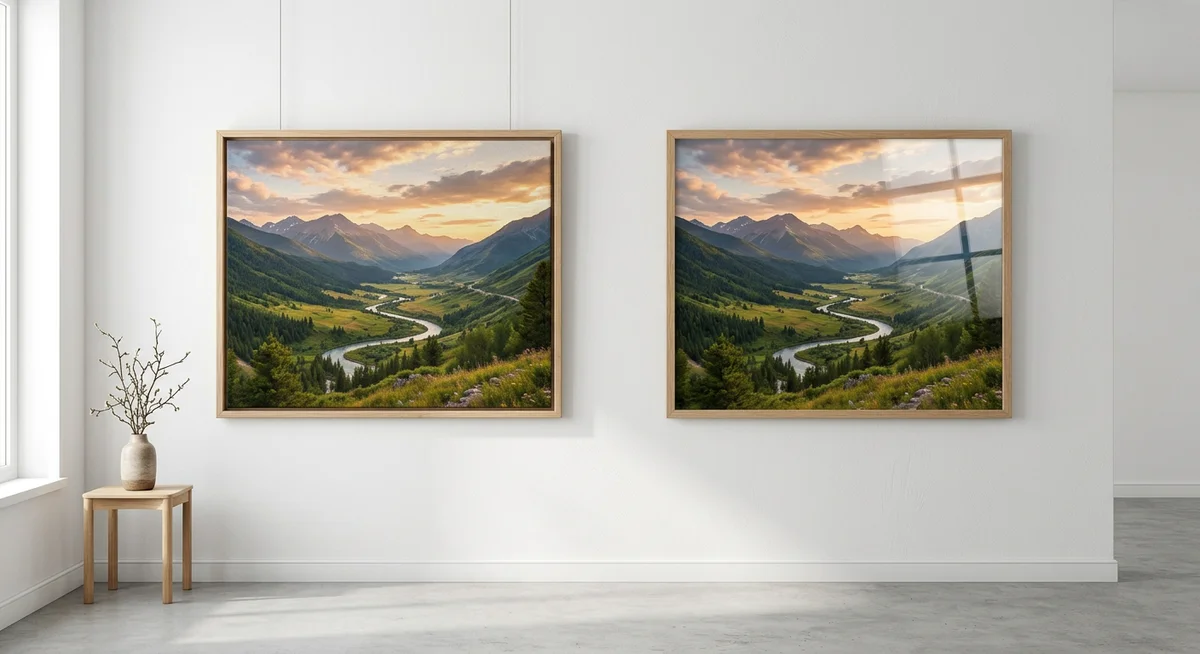
This is the section most comparison guides skip. Canvas is a spectacular format for the right images. For the wrong images, it produces disappointing results.
High-detail close-up portraits. The canvas texture obscures fine detail - eyelashes, skin pores, individual hairs. A portrait that relies on sharp detail for its impact loses that quality on canvas. Print portraits on lustre or matte photo paper instead.
Images with fine text or graphics. If the photo includes text - a signboard, a book cover, calligraphy in the background - that text blurs into the canvas weave at smaller point sizes. Even decorative calligraphy overlays become hard to read.
Macro photography. Insects, flowers, fabric textures, water droplets - macro photography is defined by detail. Canvas erases the very thing that makes macro shots remarkable.
Very small prints. Canvas reads as a textured surface from a viewing distance. At small sizes (under 8x10"), the texture-to-image ratio becomes unfavourable and the image looks rough rather than artistic.
Bathroom or high-humidity spaces. Canvas is porous fabric. In permanently humid environments - bathrooms, kitchens near steam, coastal properties in monsoon season - canvas can absorb moisture over time, causing warping, mould on the stretcher bars, or ink migration. Photo prints in a sealed frame with UV glass are a safer choice for these rooms.
Colour-critical applications. If you need the print to match a specific colour accurately - a product shot, a fashion image, a brand colour - canvas introduces too much variability. Photo paper with a calibrated print service gives far more accurate reproduction.
The India Factor - Humidity, UV, and Durability
India's climate puts both canvas and photo prints under conditions that most international guides do not account for.
Monsoon humidity regularly exceeds 80% in coastal and central regions. High UV index across most of the country accelerates ink degradation in both formats. These factors matter more than the substrate choice itself - a well-protected photo print will outlast a poorly coated canvas in the same room.
For canvas prints in India: choose UV-resistant pigment inks, ensure the canvas has a protective coating or laminate, avoid placement near windows with direct afternoon sun, and avoid permanently humid rooms without air conditioning.
For photo prints in India: pigment inks are more humidity-resistant than dye inks because the molecules are chemically stable rather than water-soluble. Framing with UV glass extends lifespan significantly in high-light rooms. For a full explanation of how waterproof and fadeproof photo prints work in India's climate specifically, the guide on what waterproof photo prints are covers the science in detail.
Both formats benefit from the same rules: avoid direct sunlight, maintain stable temperature, and use pigment inks wherever possible. And if you're trying to identify which Indian services actually use pigment inks versus cheaper dye alternatives, the India photo printing service comparison maps that out across all the major providers.
Which Lasts Longer?
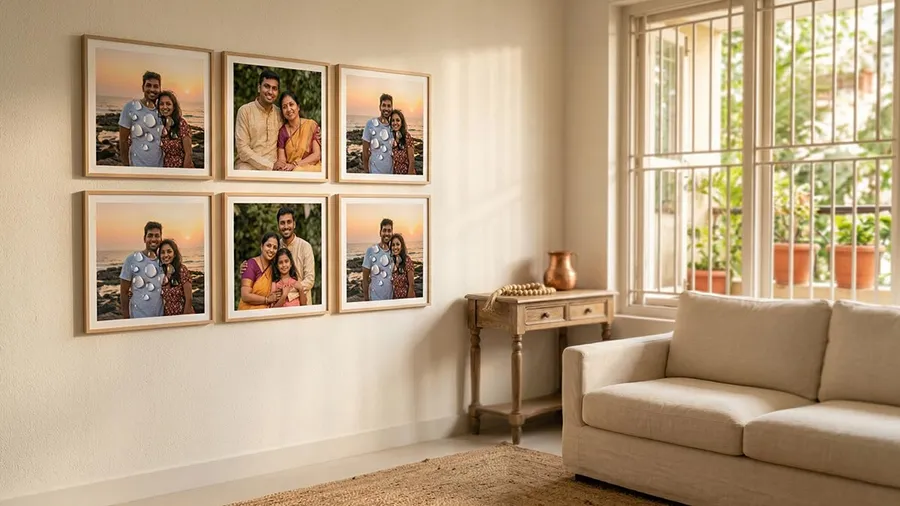
Both canvas and photo prints can last 50-100+ years when printed with the right inks and protected from direct UV exposure. The ink type matters far more than the substrate.
According to Wilhelm Imaging Research, the independent testing lab that publishes print permanence data by ink and media type:
- Pigment ink on archival photo paper: rated 75-400+ years under typical display conditions
- Pigment ink on canvas with UV coating: rated 25-75 years depending on canvas grade and coating
- Dye-based ink on any substrate: typically 3-15 years before visible colour shift
Photo paper with pigment inks outlasts canvas on a purely longevity basis. But a well-made canvas print with pigment inks and proper coating - displayed away from direct sunlight - will comfortably outlast most walls it hangs on.
As PetaPixel noted in their 2024 canvas vs. paper analysis, the photography industry consensus is that photo paper is the preferred choice for archival or collection-quality prints, while canvas is preferred for decorative display where longevity is secondary to visual impact.
For the most important photos, choose pigment inks regardless of format. For everything else, the aesthetic decision comes first.
FAQ
What is the main difference between canvas prints and photo prints?
Canvas prints are photographs printed on woven fabric stretched over a frame, creating a matte, painterly texture with no glass or additional framing required. Photo prints are photographs on coated paper, delivering sharper detail and colour accuracy across a much wider range of sizes and finishes.
Are canvas prints better than photo prints?
Neither is universally better. Canvas prints are better for large statement wall art with artistic or landscape images. Photo prints are better for detail-critical images, smaller sizes, gifts, multi-print arrangements, and colour-accurate reproduction. Most rooms benefit from both formats used appropriately.
How long do canvas prints last compared to photo paper?
Both last 50-100+ years with pigment-based inks and UV protection. Archival photo paper with pigment inks has slightly higher tested longevity - 75-400+ years per Wilhelm Imaging Research data. Budget canvas prints with dye inks can fade in 5-10 years. The ink type matters more than the substrate.
Which is more expensive - canvas or photo prints?
Canvas prints are significantly more expensive per unit. Canvas prints in India start from roughly ₹499 for a small 8x10". Photo prints start from ₹45-99 per print. The integration of frame, fabric, and printing into one product accounts for most of the cost difference.
Do canvas prints fade in sunlight?
Yes, all prints fade with direct sunlight exposure over time. Canvas prints with dye-based inks fade faster than those with pigment inks. UV-resistant coating slows this significantly. Placing canvas prints away from direct afternoon sun is the most effective way to extend their lifespan.
Are canvas prints suitable for humid rooms in India?
Standard canvas is porous fabric and can absorb moisture in permanently humid rooms - bathrooms, unventilated kitchens, coastal properties during monsoon season. For high-humidity spaces, framed photo prints behind UV glass are the more durable choice, though properly coated humid-room canvas prints on polyester substrates are a viable alternative.
Canvas prints are not yet available at Memoriffy, but every photo print we make uses pigment-based inks with a waterproof, fadeproof coating - engineered for 50-100 year durability in India's humidity and UV. See the full photo print collection and find the format that fits your wall.